
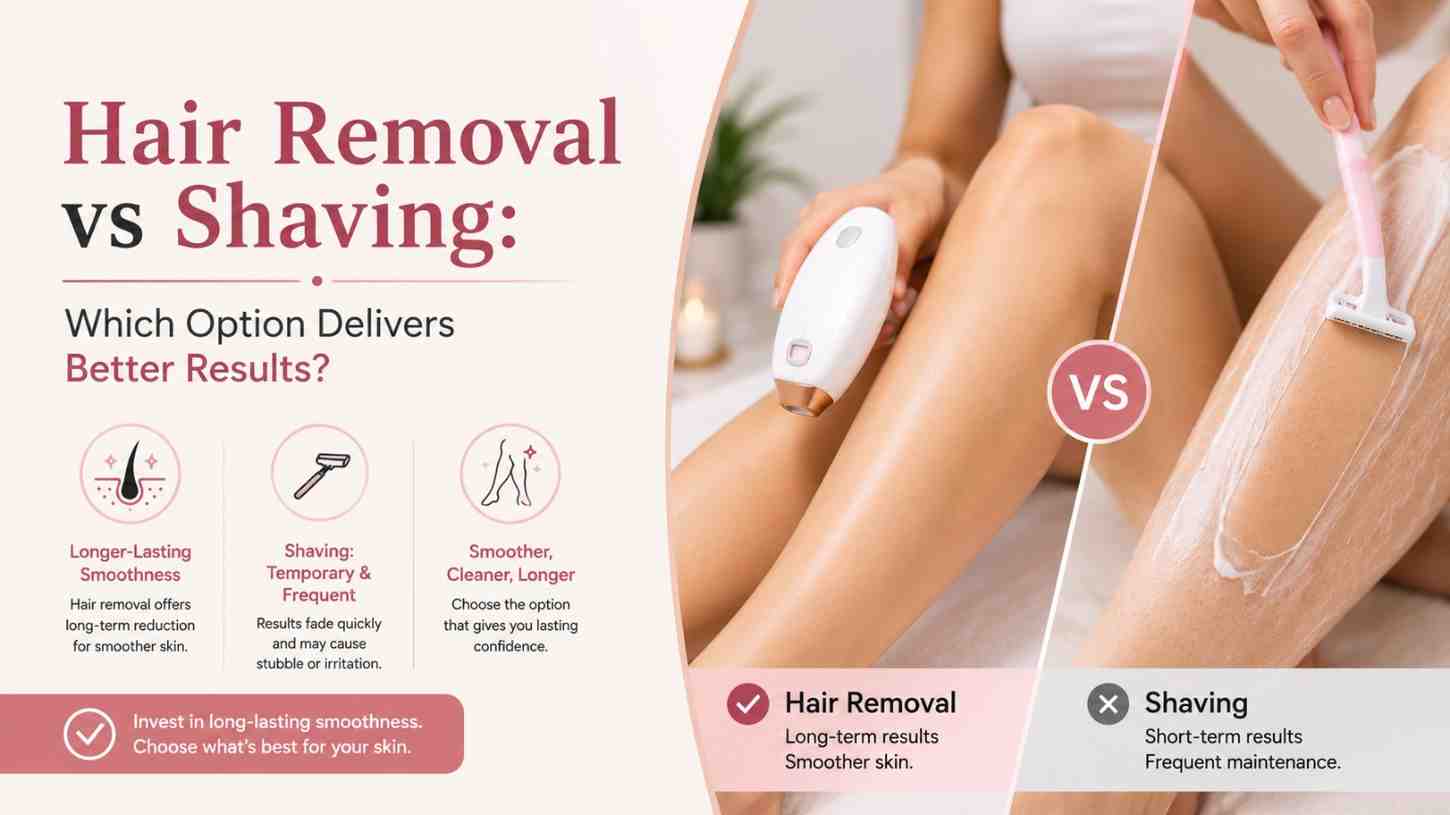
Why does the comparison matter?
Choosing between shaving and other hair removal methods affects more than appearance. It influences skin health, convenience, maintenance frequency, and long-term expenses.
Many people switch between methods without evaluating their advantages. However, a careful comparison helps avoid irritation, unnecessary spending, and disappointing results. Consequently, informed decisions often produce healthier skin and greater confidence.
Factors That Influence the Decision
Several elements shape the ideal choice:
- Hair thickness and density
- Skin sensitivity
- Pain tolerance
- Budget considerations
- Desired duration of smoothness
- Time available for maintenance
- Risk of ingrown hairs
- Preferred convenience level
Each factor contributes differently, making one option more suitable than another depending on individual priorities.
What Is Shaving?
Shaving removes hair at the skin’s surface with a razor or electric shaver. Since the root remains intact, hair returns quickly after the procedure.
Because the process takes only a few minutes, shaving remains one of the fastest grooming methods available. Moreover, most people can perform it at home without professional assistance.
Advantages of Shaving
Shaving provides several practical benefits.
- Fast and convenient
- Low initial cost
- Easy home maintenance
- No waiting period between sessions
- Suitable for large body areas
- Minimal preparation required
Furthermore, modern razors and lubricating products improve comfort and reduce friction during use.
Limitations of Shaving
Despite its convenience, shaving also presents challenges.
- Hair regrows quickly
- Frequent maintenance becomes necessary
- Razor burns may occur
- Small cuts remain possible
- Ingrown hairs may develop
- Skin irritation affects sensitive individuals
In contrast to longer-lasting methods, shaving demands consistent upkeep throughout the month.
What Does Hair Removal Include?
Hair removal refers to methods that eliminate hair below the skin’s surface or weaken future growth. These options include waxing, epilation, threading, sugaring, and advanced procedures designed for extended results.
Because these techniques target the hair more effectively, smoothness generally lasts much longer than shaving.
For people seeking reduced maintenance, a professional hair removal treatment may provide greater convenience over time while supporting longer intervals between sessions.
Common Hair Removal Techniques
Popular methods include:
- Waxing
- Sugaring
- Threading
- Epilators
- Depilatory creams
- Laser-based procedures
- Intense pulsed light systems
Each method differs in cost, discomfort, effectiveness, and maintenance schedule.
Comparing Hair Regrowth
Hair regrowth represents one of the biggest differences between shaving and other removal methods.
Shaving cuts hair at the surface, allowing visible regrowth within one to three days. Consequently, repeated sessions become necessary for consistently smooth skin.
Many removal methods extract hair from the root instead. Therefore, regrowth often requires several weeks, creating longer-lasting smoothness and reducing grooming frequency.
Does Shaving Make Hair Thicker?
Many people believe shaving produces thicker hair. Scientific evidence does not support this belief.
Freshly shaved hair has a blunt edge, making new growth appear coarser during the early stages. However, shaving does not alter follicle structure, growth rate, or hair density.
Skin Comfort and Irritation
Skin reactions differ significantly between methods.
Shaving may create razor bumps, redness, and tiny cuts, especially when dull blades or poor techniques increase friction. Moreover, repeated shaving can weaken the skin barrier over time.
Hair removal methods may cause temporary redness immediately after treatment. Nevertheless, smoother skin often lasts longer because repeated daily friction becomes unnecessary.
Reducing Skin Problems
Healthy skin care habits improve outcomes regardless of the method.
- Clean the skin before grooming
- Use sharp, clean tools
- Moisturize afterward
- Avoid tight clothing immediately after treatment
- Exfoliate gently when appropriate
- Protect treated skin from excessive sun exposure
Simple preventive measures often reduce irritation significantly.
Pain and Comfort Levels
Comfort remains highly subjective.
Shaving causes little discomfort for most users unless cuts or razor burns occur. Therefore, many beginners choose shaving because it feels familiar and simple.
Waxing and epilation involve temporary pain because they remove hair from the root. However, many individuals consider the brief discomfort worthwhile because smoother skin lasts much longer.
Pain perception varies according to body area, hair thickness, and personal sensitivity.
Cost Comparison
Initial expenses often influence grooming decisions.
Shaving requires razors, replacement blades, and shaving products. Individual purchases appear affordable, yet continuous replacements increase long-term costs.
Alternative removal methods often require larger upfront investments. Professional sessions especially cost more initially. However, fewer appointments and longer-lasting results may offset those expenses over time.
Budget planning should include maintenance frequency instead of focusing only on single-session pricing.
Time Required for Maintenance
Busy schedules encourage efficient grooming routines.
Shaving takes only a few minutes but requires frequent repetition. Consequently, total maintenance time accumulates across months and years.
Longer-lasting removal methods require more time during each session. Nevertheless, extended smoothness reduces the number of appointments, balancing overall time commitments for many individuals.
Environmental Considerations
Personal care choices also influence environmental impact.
Disposable razors contribute to plastic waste and metal disposal challenges. Frequent replacements increase environmental burden over extended periods.
Meanwhile, reusable devices and durable equipment reduce recurring waste. Although manufacturing processes create environmental costs, longer product life may lower overall consumption.
Consumers increasingly evaluate sustainability alongside performance and convenience.
Choosing According to Skin Type
Different skin types respond differently to grooming methods.
Sensitive skin often reacts quickly to repeated razor friction. Therefore, irritation becomes more common without careful technique.
Normal skin usually tolerates multiple options effectively with proper preparation and aftercare.
Coarse hair combined with curly growth patterns increases the likelihood of ingrown hairs. Consequently, methods removing hair from the root may reduce certain recurring concerns for some individuals.
Patch testing and gradual experimentation often produce safer outcomes than sudden routine changes.
Lifestyle Considerations
Personal routines strongly influence satisfaction.
People with demanding schedules may appreciate longer intervals between maintenance sessions. Conversely, those preferring maximum flexibility may value shaving because no appointments or preparation are necessary.
Athletes, frequent travelers, and busy professionals often evaluate grooming choices according to convenience, recovery time, and predictable maintenance.
Consistency frequently matters more than selecting the most advanced method available.
Making the Right Choice
Neither option represents a universal solution.
Instead, successful grooming depends on balancing comfort, budget, skin sensitivity, maintenance expectations, and desired longevity. Moreover, preferences may change according to season, lifestyle, or evolving priorities.
Evaluating practical needs rather than popular opinions usually produces the most satisfying long-term results.
Conclusion
Shaving and hair removal methods each offer valuable advantages when matched with the right expectations. While shaving delivers speed and convenience, longer-lasting alternatives reduce maintenance and extend smoothness. Careful evaluation of skin condition, lifestyle, budget, and grooming preferences leads to a balanced decision that supports comfort, confidence, and consistent results over time.
FAQs
1. Which option lasts longer, shaving or hair removal?
Hair removal methods that extract hair from the root generally provide smoother skin for several weeks. Shaving removes only surface hair, allowing visible regrowth within a few days. Therefore, longer-lasting methods reduce maintenance frequency and often deliver greater convenience over extended periods.
2. Does shaving damage the skin?
Proper shaving usually remains safe. However, dull blades, excessive pressure, and poor preparation may cause cuts, irritation, razor burns, and bumps. Good technique, clean equipment, and moisturizing afterward help maintain healthier skin and reduce unwanted reactions.
3. Can hair removal reduce future hair growth?
Some methods may weaken hair over repeated sessions, leading to finer or slower regrowth. Results vary depending on technique, individual biology, and consistency. Permanent reduction generally requires advanced procedures rather than temporary surface grooming methods.
4. Which method costs less over time?
Short-term shaving expenses appear lower because supplies cost relatively little. However, continuous replacement purchases accumulate over many years. Longer-lasting methods often involve higher initial spending but may reduce maintenance frequency and associated long-term costs.
5. Is shaving completely painless?
Most people experience little discomfort while shaving correctly. Nevertheless, cuts, razor burns, and ingrown hairs may create pain if poor technique or unsuitable products irritate the skin. Careful preparation significantly improves comfort.
6. Which option suits sensitive skin better?
The answer depends on individual reactions. Some sensitive skin types tolerate shaving well with proper lubrication, while others experience repeated irritation. Testing different methods carefully helps identify the most comfortable long-term solution without unnecessary complications.
7. Why do ingrown hairs develop?
Ingrown hairs occur when growing hair curls back into the skin instead of emerging normally. Shaving, friction, and curly hair patterns increase the risk. Gentle exfoliation and proper grooming practices often reduce their occurrence.
8. Can people switch between methods?
Many individuals alternate between shaving and longer-lasting removal techniques according to schedules, vacations, or special occasions. Flexible routines allow people to match grooming habits with changing personal needs and lifestyle demands.
9. Does hair grow faster after shaving?
Shaving does not accelerate hair growth. Freshly cut hair may appear darker or coarser because of its blunt edge, creating an illusion of thicker growth without changing the actual follicle or growth cycle.
10. How should someone choose the best option?
The best choice depends on skin type, hair texture, maintenance preferences, budget, pain tolerance, and desired results. Evaluating these factors together supports a practical decision that aligns with personal comfort and long-term grooming goals.