
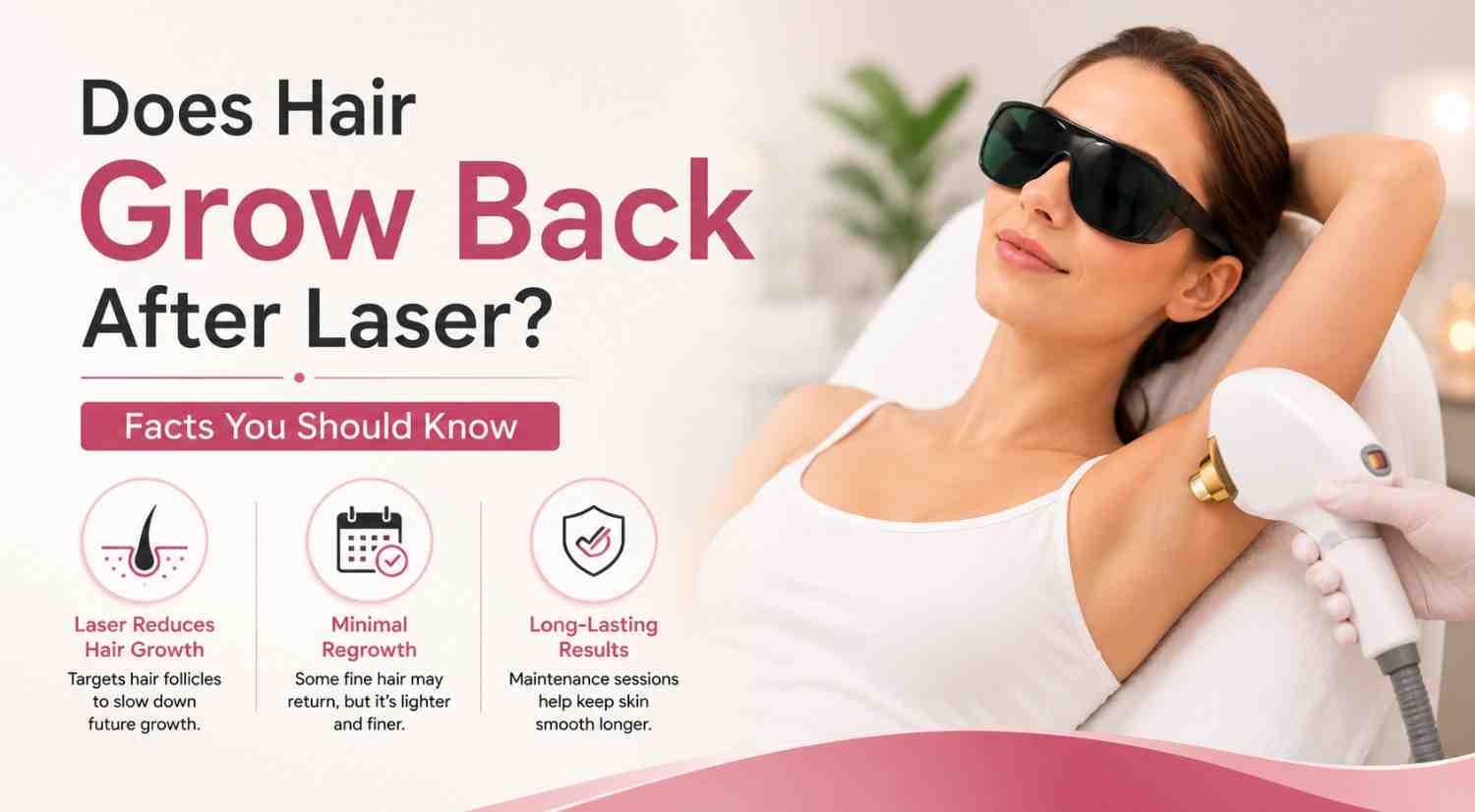
Many people choose laser procedures to reduce unwanted hair and simplify their grooming routine. A common question remains whether hair returns after completing the recommended sessions. The answer depends on several factors, including hair type, hormones, treatment consistency, and natural body changes. Although laser technology significantly reduces hair growth, it does not always eliminate every follicle permanently. Knowing what happens after treatment helps create realistic expectations and supports better long-term satisfaction.
Why Hair May Return After Laser?
Laser technology targets active hair follicles with concentrated light energy. The heat damages the follicle and limits its ability to produce new hair. However, not every follicle stays active during a single session.
As a result, untreated follicles may continue producing hair until future appointments target them. Consequently, multiple sessions remain essential for achieving a noticeable and lasting reduction.
Hair Growth Happens in Cycles
Hair grows through different biological stages, and only active follicles respond effectively to laser energy.
The main growth phases include:
- Active growth phase
- Transition phase
- Resting phase
Because follicles enter these stages at different times, repeated sessions improve overall results by treating more follicles throughout the cycle.
Does Hair Grow Back Completely?
Most people experience a significant reduction instead of complete removal. Any regrowth usually appears finer, softer, and lighter than before treatment.
Moreover, the amount of returning hair often remains far lower than the original density. Therefore, many individuals enjoy smoother skin with much less maintenance.
Permanent Reduction Versus Permanent Removal
Many people confuse these two concepts.
Permanent reduction means the treatment decreases the number of growing hairs for an extended period. Permanent removal suggests every follicle stops producing hair forever.
Laser procedures generally provide long-term reduction rather than total elimination, making realistic expectations an important part of the process.
Factors That Affect Hair Regrowth
Several variables influence whether hair returns after treatment.
Hormonal Changes
Hormones strongly affect hair growth.
Pregnancy, menopause, thyroid conditions, and hormonal disorders may activate dormant follicles. Consequently, new hair growth can appear even after successful treatment.
Hair Color and Thickness
Dark, coarse hair responds more effectively because it contains more pigment.
Light-colored or very fine hair absorbs less laser energy, which may reduce treatment effectiveness and increase the chance of future regrowth.
Treatment Consistency
Following the recommended schedule allows each session to target different active follicles.
Skipping appointments or ending treatment early may leave many follicles unaffected, reducing long-term success.
Why Maintenance Sessions Matter
Even after excellent results, occasional maintenance sessions help preserve smoother skin.
Dormant follicles may become active naturally over time. Therefore, touch-up appointments address new growth before it becomes noticeable.
Many people require only infrequent maintenance, making laser procedures far less demanding than constant shaving or waxing.
Benefits of Maintenance Treatments
Regular touch-ups offer several advantages:
- Maintain reduced hair density
- Address newly active follicles
- Keep skin smoother
- Extend long-term results
- Reduce future grooming time
- Support a consistent appearance
Small maintenance efforts often produce significant long-term benefits.
How Long Do Results Last?
Results differ among individuals because genetics and hormones influence follicle activity.
Many people notice reduced growth for months or even years after completing treatment. Furthermore, any returning hair often grows more slowly and appears much finer than before.
Long-lasting reduction remains one of the biggest reasons people choose laser procedures over temporary methods.
Can New Hair Follicles Develop?
The body does not typically create entirely new follicles after birth. However, inactive follicles may begin producing hair because of hormonal changes or natural biological processes.
Consequently, people sometimes notice new growth years after finishing treatment. This regrowth does not necessarily indicate treatment failure but reflects normal body changes.
Comparing Laser With Temporary Hair Removal
Temporary methods remove hair without affecting the follicle significantly.
Shaving cuts hair at the skin surface, while waxing removes it from the root. Nevertheless, both methods allow complete regrowth over time.
Laser procedures work differently by weakening follicle activity. As a result, hair often becomes thinner and less noticeable after several sessions.
Comparison at a Glance
Laser procedures generally provide:
- Longer-lasting reduction
- Less frequent maintenance
- Fewer ingrown hairs
- Smoother skin texture
- Reduced shaving needs
- Improved convenience
These advantages make laser treatment attractive for many individuals seeking lasting results.
Skin Improvements Beyond Hair Reduction
Reduced hair growth often improves overall skin appearance.
Repeated shaving may cause razor burns, irritation, and bumps. However, lower hair density decreases the need for constant grooming, allowing skin to remain calmer.
Many individuals also notice fewer ingrown hairs and a smoother texture after completing their treatment schedule.
Who Experiences the Best Results?
Several characteristics influence treatment success.
People with dark hair and lighter skin often respond well because pigment absorbs laser energy efficiently. Modern technology also treats broader skin tones with appropriate settings.
Individual biology still plays a major role, so results vary from person to person despite similar treatment plans.
Important Considerations Before Starting
People should consider these factors before beginning treatment:
- Hair color
- Skin tone
- Hormonal health
- Treatment schedule
- Medical history
- Long-term expectations
Careful planning supports greater satisfaction and better long-term outcomes.
Common Myths About Hair Returning
Many misconceptions create unrealistic expectations.
Some believe one session permanently removes every hair. Others assume any regrowth means treatment failed.
Neither belief reflects reality. Instead, laser significantly reduces hair growth while occasional maintenance addresses new follicle activity that develops naturally over time.
Another common myth suggests that returning hair becomes thicker. In contrast, regrowth generally appears finer and less dense after successful treatment.
Tips for Maintaining Results
Simple habits help preserve smoother skin after treatment.
- Complete every recommended session
- Attend maintenance appointments when needed
- Protect treated skin from excessive sunlight
- Follow aftercare instructions carefully
- Maintain healthy skincare habits
- Avoid unnecessary irritation between sessions
People choosing laser hair removal treatment often achieve better long-term reduction by combining professional care with consistent maintenance and realistic expectations.
Conclusion
Hair can grow back after laser treatment, but it usually returns in a finer, lighter, and less noticeable form. Multiple sessions and periodic maintenance create the strongest long-term results while reducing everyday grooming needs. Realistic expectations, consistent treatment schedules, and proper aftercare allow many individuals to enjoy smoother skin and lasting hair reduction for years.
FAQs
1. Does hair always grow back after laser?
Some hair may return because dormant follicles can become active later. However, regrowth usually appears finer, lighter, and less dense than before treatment, making maintenance much easier than with temporary hair removal methods.
2. Is laser hair removal permanent?
Laser provides long-term hair reduction rather than guaranteed permanent removal. Many follicles stop producing hair for extended periods, while others may reactivate because of hormonal or biological changes over time.
3. How many sessions are usually necessary?
Most individuals require several sessions because hair grows in different cycles. Treating follicles during their active stage increases effectiveness and improves long-term reduction across the targeted area.
4. Why does hair return after successful treatment?
Hormonal changes, genetics, and dormant follicles contribute to future hair growth. Regrowth does not always indicate poor treatment results because natural biological changes continue throughout life.
5. Will returning hair look the same as before?
In many cases, returning hair appears thinner, lighter, and softer than the original growth. Reduced density also makes future maintenance faster and more manageable.
6. Can maintenance sessions stop new growth?
Maintenance appointments target newly active follicles and help preserve smoother skin. Although they may not prevent every future hair from appearing, they significantly support long-term reduction.
7. Does laser work equally well for everyone?
Results vary according to skin tone, hair color, hormones, and treatment consistency. Individual biological differences influence overall effectiveness and long-term outcomes.
8. Can hormonal conditions affect laser results?
Yes. Hormonal imbalances may stimulate dormant follicles and increase future hair growth. Consequently, individuals with hormonal changes sometimes require additional maintenance sessions.
9. Is shaving necessary after laser treatment?
Some people shave between sessions because treated hair sheds gradually. Shaving does not interfere with laser effectiveness when performed according to professional recommendations.
10. What helps maintain long-lasting results?
Completing every scheduled session, following aftercare instructions, protecting the skin, and attending occasional touch-up appointments help preserve smoother skin and reduce future hair growth effectively.