
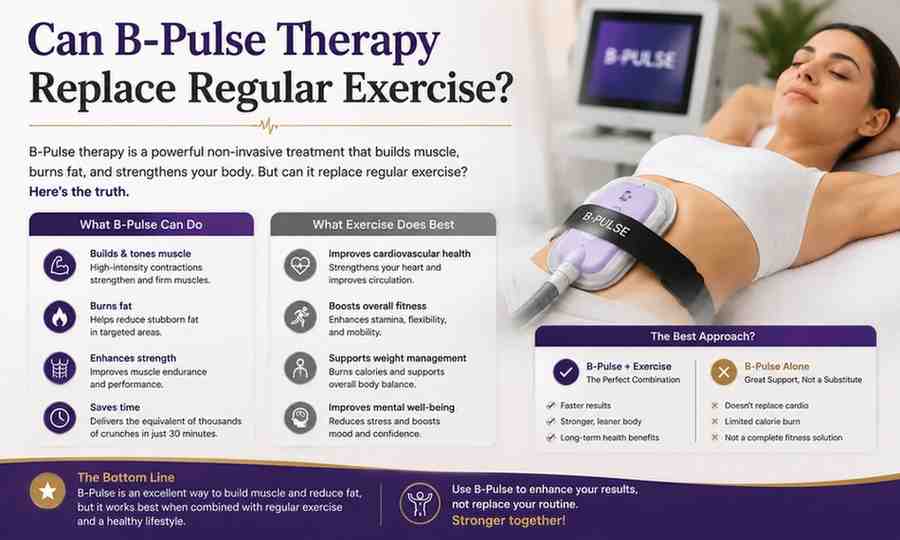
Technology continues to reshape how individuals approach fitness and body care. Among emerging methods, B-Pulse therapy has gained attention for its ability to stimulate muscles through electrical impulses. This approach raises an important question: can it truly replace exercise?
Exercise has long served as the foundation of physical health. It supports cardiovascular function, builds strength, and enhances overall well-being. B-Pulse therapy introduces a different pathway by activating muscles without traditional movement. A closer examination reveals whether this method can stand alone or serve as a complementary tool.
What Is B-Pulse Therapy?
B-Pulse therapy uses electrical muscle stimulation to activate muscle fibers. The system delivers controlled pulses that cause muscles to contract and relax. These contractions mimic the natural signals sent by the nervous system during physical activity.
The treatment targets specific muscle groups, allowing focused stimulation. It aims to improve muscle tone, circulation, and metabolic activity. While the process may resemble exercise in certain aspects, it operates through external stimulation rather than voluntary movement.
This distinction shapes how the body responds to the treatment.
How Exercise Engages the Body?
Exercise involves coordinated movement that engages multiple systems within the body. Muscles contract through signals from the brain, while the cardiovascular system works to deliver oxygen and nutrients.
Key functions of exercise include:
- Strengthening muscles through resistance
- Improving heart and lung function
- Enhancing flexibility and mobility
- Supporting metabolic health
These combined effects contribute to overall physical fitness. Exercise also influences mental well-being, which adds another layer of benefit.
Comparing Muscle Activation
B-Pulse therapy and exercise both activate muscles, but they do so in different ways.
B-Pulse therapy:
- Uses electrical impulses to trigger contractions
- Targets specific muscle groups
- Does not require physical effort
- Provides controlled stimulation
Exercise:
- Relies on voluntary movement
- Engages multiple muscle groups simultaneously
- Requires energy expenditure
- Builds coordination and endurance
This comparison highlights the fundamental differences between passive stimulation and active movement.
Can B-Pulse Replace Exercise Completely?
B-Pulse therapy cannot fully replace exercise. While it stimulates muscles effectively, it does not replicate the full range of benefits that physical activity provides.
Exercise engages the cardiovascular system, improves coordination, and supports mental health. B-Pulse therapy focuses primarily on muscle stimulation. It lacks the dynamic movement and systemic engagement that exercise offers.
Key limitations include:
- Limited impact on cardiovascular fitness
- Reduced calorie expenditure compared to exercise
- Lack of functional movement development
- Minimal effect on endurance
These factors prevent it from serving as a complete substitute.
Where B-Pulse Therapy Excels
Although it cannot replace exercise, B-Pulse therapy offers unique advantages.
Notable benefits include:
- Targeted muscle activation
- Support for muscle recovery
- Improved circulation in specific areas
- Assistance for individuals with limited mobility
These strengths make it a valuable addition to certain fitness and wellness routines.
Role in Muscle Toning and Definition
B-Pulse therapy helps improve muscle tone by stimulating contractions repeatedly. This process can enhance firmness and definition in targeted areas.
However, muscle growth depends on progressive resistance and load, which exercise provides more effectively. B-Pulse therapy supports toning but does not replace strength training for building muscle mass.
A combined approach often delivers better results.
Impact on Calorie Burn and Weight Management
Exercise plays a critical role in calorie expenditure. Activities such as walking, running, and strength training increase energy usage and support weight management.
B-Pulse therapy burns fewer calories because it does not involve full-body movement. While it stimulates muscles, it does not elevate heart rate to the same extent as physical activity.
Comparison of calorie impact:
- Exercise: high energy expenditure
- B-Pulse therapy: limited calorie burn
This difference highlights why exercise remains essential for weight control.
Cardiovascular Health Considerations
Cardiovascular health depends on activities that elevate heart rate and improve circulation throughout the body. Exercise strengthens the heart and enhances lung capacity.
B-Pulse therapy improves localized circulation but does not provide the same cardiovascular benefits. It does not challenge the heart in the way aerobic activity does.
Maintaining heart health requires regular physical activity beyond muscle stimulation.
Flexibility, Mobility, and Coordination
Exercise improves flexibility, mobility, and coordination through dynamic movement. Activities such as stretching and functional training enhance joint range and balance.
B-Pulse therapy does not involve movement, so it cannot improve these aspects directly. It focuses on muscle contraction rather than functional performance.
Key differences:
- Exercise builds coordination and balance
- B-Pulse therapy targets isolated muscle activity
This distinction emphasizes the importance of movement-based training.
Mental and Emotional Benefits
Exercise supports mental well-being by reducing stress and improving mood. Physical activity stimulates the release of endorphins, which contribute to a positive mental state.
B-Pulse therapy may provide relaxation through muscle stimulation, but it does not replicate the psychological benefits of active exercise.
Mental health remains an important factor when evaluating fitness methods.
Situations Where B-Pulse Therapy Adds Value
B-Pulse therapy can play a supportive role in specific situations.
Suitable applications include:
- Rehabilitation after injury
- Muscle activation for sedentary individuals
- Supplementary toning alongside exercise
- Recovery support for athletes
These scenarios highlight its usefulness as a complementary tool rather than a replacement.
Combining B-Pulse Therapy with Exercise
Combining both approaches often leads to better outcomes. Exercise provides systemic benefits, while B-Pulse therapy enhances targeted muscle activation.
Advantages of combining methods:
- Improved muscle engagement
- Enhanced recovery
- Balanced approach to fitness
- Greater overall efficiency
This integration allows individuals to maximize the benefits of each method.
Accessibility and Regional Interest
Interest in advanced body conditioning methods continues to grow across different regions. Many individuals search for options such as b-pulse therapy Ottawa when exploring alternatives to traditional fitness routines.
This demand reflects curiosity about innovative approaches that support muscle health and body conditioning.
Common Misconceptions About B-Pulse Therapy
Misconceptions can create unrealistic expectations about its capabilities.
Frequent myths include:
- It replaces all forms of exercise
- It delivers instant fitness results
- It builds muscle without any effort
- It provides full-body health benefits
Clarifying these points helps individuals approach the treatment with accurate expectations.
Preparing for a B-Pulse Session
Preparation ensures a smooth and effective session.
Preparation tips:
- Stay hydrated
- Wear comfortable clothing
- Avoid heavy meals before treatment
- Follow professional recommendations
These steps support better results and overall comfort.
Post-Treatment Care and Routine Integration
Post-treatment care helps maintain the benefits of B-Pulse therapy.
Recommended practices:
- Engage in light physical activity
- Maintain hydration
- Follow a balanced fitness routine
- Schedule sessions consistently
These actions reinforce the treatment’s effects and support overall health.
Conclusion
B-Pulse therapy offers a valuable approach to muscle stimulation and targeted conditioning. It enhances muscle tone, supports recovery, and provides a convenient option for individuals with specific needs.
However, it cannot replace the broad benefits of exercise. Physical activity remains essential for cardiovascular health, coordination, and overall well-being. A combined approach allows individuals to benefit from both methods, creating a balanced and effective fitness routine.
FAQs
1. Can B-Pulse therapy replace regular exercise?
B-Pulse therapy cannot replace exercise because it does not engage the cardiovascular system or promote full-body movement. It stimulates muscles effectively but lacks the comprehensive benefits of physical activity. Combining both methods provides a more balanced approach to fitness.
2. Does B-Pulse therapy help build muscle?
B-Pulse therapy supports muscle toning by stimulating contractions. However, it does not provide the progressive resistance needed for significant muscle growth. Strength training remains essential for building muscle mass and improving overall strength.
3. Is B-Pulse therapy effective for weight loss?
B-Pulse therapy has a limited impact on weight loss because it burns fewer calories compared to exercise. It can support muscle activation, but weight management requires physical activity and proper nutrition for effective results.
4. Can beginners rely on B-Pulse therapy alone?
Beginners may use B-Pulse therapy to activate muscles, but relying on it alone does not provide complete fitness benefits. Incorporating regular exercise helps improve endurance, coordination, and overall health.
5. Does B-Pulse therapy improve cardiovascular health?
B-Pulse therapy does not significantly improve cardiovascular health because it does not elevate heart rate in the same way as aerobic exercise. Activities such as walking or running remain essential for heart health.
6. Is B-Pulse therapy safe for all individuals?
B-Pulse therapy is generally safe when performed correctly. Individuals with certain medical conditions should consult a professional before starting treatment. Proper assessment ensures safety and effectiveness.
7. How often should B-Pulse sessions be scheduled?
Frequency depends on individual goals and fitness levels. Regular sessions can enhance muscle activation, but combining them with exercise provides better overall results. A balanced schedule ensures optimal benefits.
8. Can B-Pulse therapy improve flexibility?
B-Pulse therapy does not directly improve flexibility because it does not involve movement. Stretching and mobility exercises remain necessary for maintaining joint health and flexibility.
9. Does B-Pulse therapy help with recovery?
Yes, B-Pulse therapy can support recovery by improving circulation and reducing muscle tension. It helps relax targeted areas and may enhance the body’s natural recovery processes after physical activity.
10. What makes exercise irreplaceable?
Exercise engages multiple systems, including muscles, heart, and lungs. It improves strength, endurance, and mental well-being. B-Pulse therapy focuses on muscle stimulation but cannot replicate the full range of benefits that exercise provides.