
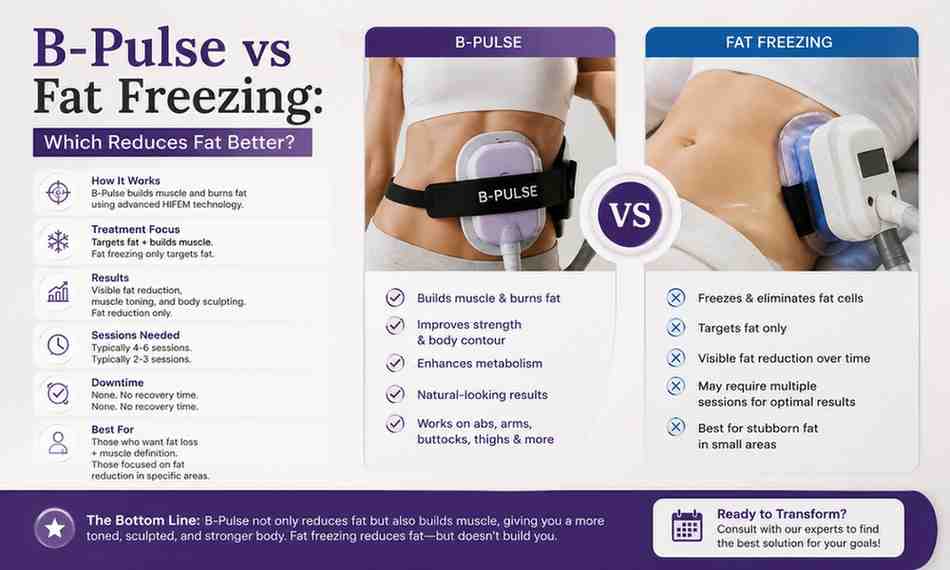
Compare B-Pulse and fat freezing for fat reduction, muscle toning, and body contouring to choose the most effective non-invasive option.
Body contouring continues to evolve as individuals seek effective ways to refine shape without surgery. Among modern approaches, B-Pulse therapy and fat freezing stand out for their non-invasive nature and distinct mechanisms. Each method offers a different pathway to improving body appearance, yet they operate on entirely separate principles.
B-Pulse therapy focuses on muscle activation, while fat freezing targets fat cells directly. This contrast creates confusion for those deciding between them. A clear comparison helps reveal how each method performs and where it fits within a body contouring strategy.
The Science Behind B-Pulse Therapy
B-Pulse therapy uses electrical muscle stimulation to activate muscle fibers. The system sends controlled impulses that cause muscles to contract repeatedly. These contractions mimic natural signals from the nervous system.
The treatment enhances muscle tone and supports localized circulation. It does not remove fat directly but improves the appearance of treated areas by strengthening underlying muscles. This process creates a firmer and more defined look.
The effect depends on consistent sessions and proper integration with lifestyle habits.
The Principle of Fat Freezing
Fat freezing, also known as cryolipolysis, works by exposing fat cells to controlled cooling. The low temperature damages fat cells without affecting surrounding tissues. Over time, the body processes and eliminates these cells naturally.
This method targets stubborn fat deposits that resist diet and exercise. It focuses on reducing fat volume rather than improving muscle tone.
The results develop gradually as the body clears the affected cells.
Core Differences in Mechanism
The fundamental difference between these treatments lies in how they interact with the body.
B-Pulse therapy:
- Stimulates muscle contractions
- Enhances muscle tone and firmness
- Improves localized circulation
- Does not directly reduce fat cells
Fat freezing:
- Targets fat cells through cooling
- Reduces fat volume in treated areas
- Does not affect muscle tone
- Relies on natural elimination processes
These distinctions shape the outcomes of each method.
Body Contouring Goals and Treatment Choice
Choosing between B-Pulse therapy and fat freezing depends on specific goals. Each method addresses a different aspect of body contouring.
Ideal goals for B-Pulse therapy:
- Improving muscle tone
- Enhancing firmness
- Supporting muscle activation
- Refining body shape through definition
Ideal goals for fat freezing:
- Reducing localized fat deposits
- Targeting stubborn areas
- Achieving slimmer contours
- Addressing fat that resists exercise
Aligning goals with treatment capabilities ensures better results.
Effectiveness for Fat Reduction
Fat freezing provides direct fat reduction by eliminating fat cells. Once the body removes these cells, the reduction becomes long-lasting.
B-Pulse therapy does not remove fat cells. It enhances muscle tone, which may create a more sculpted appearance. However, it does not significantly decrease fat volume.
Key takeaway:
- Fat freezing reduces fat directly
- B-Pulse therapy improves appearance indirectly
This difference plays a central role in decision-making.
Impact on Muscle Tone and Definition
Muscle tone influences how the body appears after fat reduction. B-Pulse therapy excels in this area by stimulating muscle contractions.
Fat freezing does not affect muscle tone. It focuses solely on reducing fat. Without muscle engagement, the treated area may lack firmness.
Comparison:
- B-Pulse therapy: strong impact on muscle definition
- Fat freezing: no direct effect on muscle
Combining both methods can enhance the overall contour.
Treatment Experience and Comfort
The experience during each treatment differs significantly.
B-Pulse therapy involves rhythmic muscle contractions. The sensation feels similar to intense muscle engagement. Most individuals tolerate it well.
Fat freezing involves a cooling sensation followed by numbness. The treated area may feel cold initially, then gradually lose sensation.
Both methods avoid invasive procedures, but their sensory experiences vary.
Timeline of Results
Results from these treatments develop at different speeds.
B-Pulse therapy produces gradual improvements in muscle tone with repeated sessions. Visible changes depend on consistency.
Fat freezing shows results over several weeks as the body eliminates fat cells. The process requires patience.
Timeline comparison:
- B-Pulse therapy: progressive toning
- Fat freezing: delayed fat reduction
Understanding these timelines helps set realistic expectations.
Longevity of Results
Both treatments offer lasting results when maintained properly.
Fat freezing provides long-term fat reduction because eliminated fat cells do not return. However, remaining fat cells can expand if lifestyle habits change.
B-Pulse therapy requires ongoing sessions to maintain muscle tone. Without maintenance, muscles may lose definition over time.
Longevity factors:
- Lifestyle habits
- Consistency of treatment
- Overall health
These elements influence how long results remain visible.
Suitability for Different Body Types
Each method suits different body profiles.
B-Pulse therapy works well for individuals seeking improved muscle tone without significant fat reduction. It suits those who already maintain a healthy weight.
Fat freezing suits individuals with localized fat deposits that do not respond to exercise. It targets specific areas rather than overall weight loss.
Matching the method to body type ensures better outcomes.
Combining Both Treatments
Combining B-Pulse therapy and fat freezing often produces balanced results. Each method addresses a different aspect of body contouring.
Benefits of the combination:
- Fat reduction through freezing
- Muscle toning through stimulation
- Enhanced overall shape
- More defined contours
This integrated approach creates a more complete transformation.
Lifestyle Integration and Maintenance
Lifestyle plays a crucial role in maintaining results.
Key habits include:
- Regular physical activity
- Balanced nutrition
- Adequate hydration
- Consistent treatment sessions
These habits support both fat reduction and muscle tone, enhancing the effectiveness of treatments.
Regional Demand and Awareness
Interest in non-invasive body contouring continues to grow across various regions. Many individuals seek options such as b-pulse therapy Ottawa when exploring alternatives to traditional methods.
This trend reflects a shift toward treatments that offer convenience and targeted results without surgical intervention.
Common Misconceptions About Both Methods
Misconceptions often create unrealistic expectations.
Frequent myths include:
- Both treatments deliver identical results
- B-Pulse therapy removes fat
- Fat freezing builds muscle
- One session provides a complete transformation
Accurate information helps individuals make informed decisions.
Preparation Before Treatment
Preparation supports better outcomes and reduces potential discomfort.
Preparation tips:
- Stay hydrated
- Avoid heavy meals before sessions
- Wear comfortable clothing
- Follow professional recommendations
These steps create a favorable environment for treatment.
Post-Treatment Care and Recovery
Proper care after treatment enhances results.
Post-treatment practices:
- Maintain hydration
- Engage in light activity
- Follow recommended routines
- Monitor treated areas
These actions help support the body’s natural processes.
Conclusion
B-Pulse therapy and fat freezing offer distinct solutions for body contouring. One enhances muscle tone, while the other reduces fat. Each method provides value depending on individual goals and body type.
A thoughtful approach often involves combining both techniques with healthy lifestyle habits. This balanced strategy supports lasting results and a more refined appearance.
FAQs
1. What is the main difference between B-Pulse and fat freezing?
B-Pulse therapy stimulates muscles through electrical impulses, improving tone and firmness. Fat freezing targets fat cells using controlled cooling, reducing fat volume. The difference lies in muscle activation versus fat reduction.
2. Can B-Pulse therapy reduce fat?
B-Pulse therapy does not directly reduce fat cells. It enhances muscle tone, which may improve appearance. For significant fat reduction, methods such as fat freezing provide more direct results.
3. How long do fat freezing results last?
Fat freezing results can last long-term because the body eliminates treated fat cells. Maintaining a healthy lifestyle helps preserve these results and prevents remaining fat cells from expanding.
4. Is B-Pulse therapy painful?
B-Pulse therapy creates strong muscle contractions that may feel intense but generally remain tolerable. The sensation resembles a controlled workout rather than pain.
5. Can both treatments be combined?
Yes, combining B-Pulse therapy and fat freezing can enhance results. Fat freezing reduces fat, while B-Pulse improves muscle tone, creating a more defined and balanced appearance.
6. Which treatment works faster?
B-Pulse therapy shows gradual improvements with repeated sessions. Fat freezing takes several weeks to produce visible results as the body eliminates fat cells. The timeline depends on the treatment type.
7. Are these treatments suitable for weight loss?
Neither treatment serves as a primary weight loss method. They focus on body contouring rather than overall weight reduction. A healthy lifestyle remains essential for managing weight.
8. Do results require maintenance?
Yes, both treatments benefit from maintenance. B-Pulse therapy requires ongoing sessions to sustain muscle tone. Fat freezing results remain stable, but lifestyle habits influence long-term outcomes.
9. Is fat freezing safe for all individuals?
Fat freezing is generally safe when performed correctly. Individuals with certain medical conditions should consult a professional before treatment. Proper assessment ensures safety and effectiveness.
10. Which option is more cost-effective?
Cost-effectiveness depends on individual goals and treatment plans. B-Pulse therapy involves multiple sessions, while fat freezing may require fewer treatments. Evaluating long-term benefits helps determine value.