
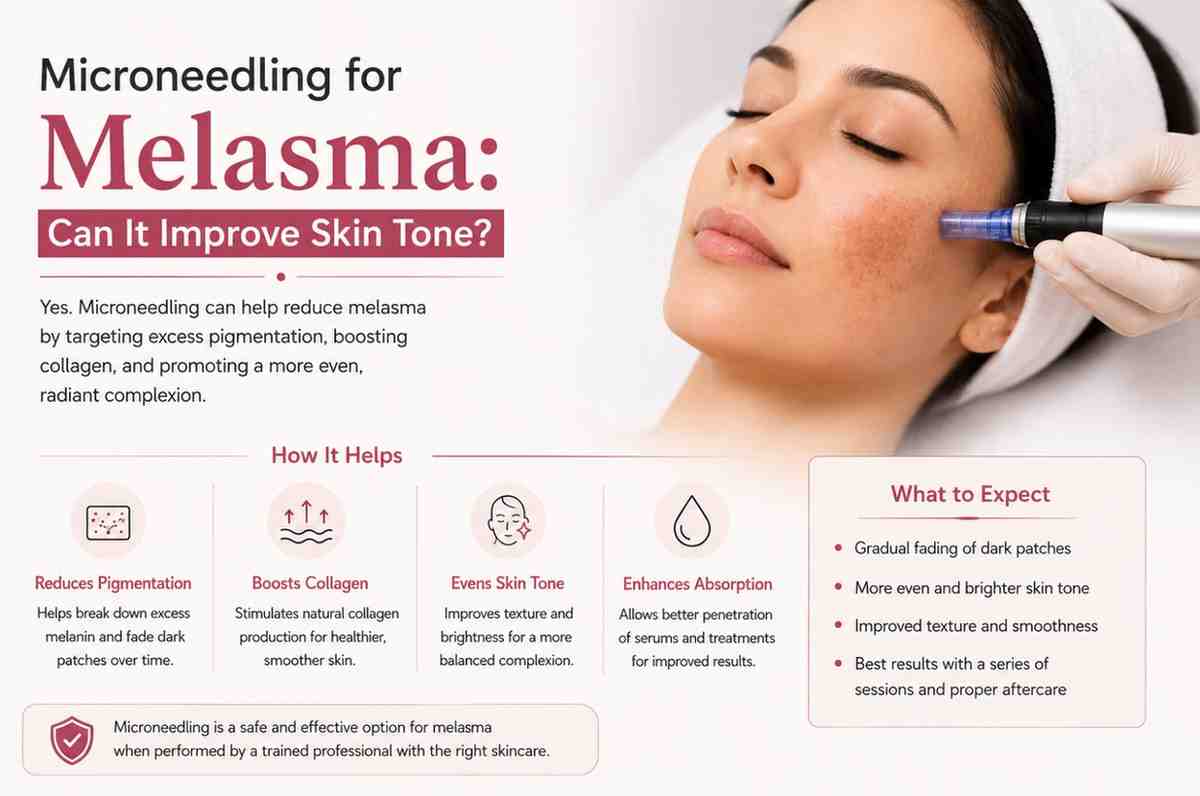
Melasma causes patches of dark pigmentation that often appear on the face and can affect confidence as well as skin appearance. Hormonal changes, sunlight exposure, and genetic factors frequently contribute to its development. Many cosmetic treatments aim to improve uneven pigmentation, and microneedling has gained attention as one possible option. By stimulating natural skin renewal and collagen production, the procedure may support gradual improvement while enhancing overall skin quality when combined with proper skincare and sun protection.
What Is Melasma?
Melasma is a chronic pigmentation condition that creates symmetrical brown or grayish patches on the skin, especially across the cheeks, forehead, nose, and upper lip.
Moreover, excessive melanin production causes these visible changes beneath the skin surface. Consequently, treatment often focuses on reducing pigmentation while preventing further stimulation of pigment-producing cells.
Common Triggers of Melasma
Several factors contribute to melasma development.
- Sun exposure
- Hormonal fluctuations
- Genetic predisposition
- Heat exposure
- Certain medications
- Skin irritation
Managing these triggers supports better long-term control of pigmentation.
How Microneedling Works
Microneedling creates controlled microchannels within the skin using fine sterile needles. These tiny injuries activate natural healing responses that stimulate collagen production and encourage fresh cell turnover.
Furthermore, skin renewal gradually replaces older surface cells with healthier tissue. As a result, overall texture and appearance often improve after repeated treatment sessions.
Natural Skin Repair Process
Microneedling promotes several biological responses.
- Collagen formation
- Elastin production
- Cell regeneration
- Improved skin texture
- Better tissue remodeling
- Enhanced skin quality
These processes contribute to gradual cosmetic improvement.
Can Microneedling Help Melasma?
Microneedling may improve certain aspects of melasma by supporting healthier skin renewal and encouraging more even texture. However, treatment outcomes vary because melasma develops through complex biological mechanisms.
Consequently, microneedling should be approached carefully and as part of a broader skin management strategy rather than a permanent cure.
Many professionals combine skin renewal methods with protective skincare measures to improve overall results.
Improving Skin Texture Alongside Pigmentation
Melasma often affects more than skin color alone. Uneven texture and dull appearance may accompany pigmentation changes.
Microneedling stimulates collagen beneath the surface, creating smoother skin while improving firmness. Moreover, healthier skin structure reflects light more evenly, making discoloration appear less noticeable in some individuals.
Texture Improvements May Include
Possible cosmetic improvements include:
- Softer skin
- Better elasticity
- Improved smoothness
- Refined surface texture
- Increased firmness
- Healthier appearance
Collagen remodeling remains central to these visible changes.
Role of Collagen in Skin Health
Collagen serves as the structural framework that supports firm and resilient skin. Natural collagen production gradually declines with age, reducing skin strength and elasticity.
Microneedling activates collagen synthesis through controlled healing responses. Therefore, stronger skin structure develops over time while supporting a healthier complexion.
Although collagen does not directly eliminate pigment, it enhances overall skin quality significantly.
Why Sun Protection Remains Essential
Sun exposure stimulates melanin production and often worsens melasma.
Therefore, protecting treated skin from ultraviolet radiation remains one of the most important aspects of long-term care. Moreover, daily sun protection helps preserve cosmetic improvements while reducing the likelihood of recurring pigmentation.
Without adequate protection, new pigment formation may limit treatment success.
Helpful Protective Measures
Simple daily habits include:
- Wear broad-spectrum sunscreen
- Use protective clothing
- Seek shade outdoors
- Avoid prolonged heat exposure
- Reapply sunscreen regularly
- Maintain gentle skincare
Consistent protection supports healthier skin over time.
Who May Benefit from Microneedling?
Individuals with stable melasma and uneven skin texture may consider microneedling under appropriate professional evaluation. The procedure often appeals to those seeking gradual skin improvement without aggressive resurfacing techniques.
However, skin sensitivity, pigmentation patterns, and medical history influence treatment suitability. Careful planning helps reduce unnecessary irritation that could stimulate additional pigmentation.
Limitations of Treatment
Microneedling offers valuable cosmetic benefits, yet it cannot permanently eliminate melasma because the condition often returns when underlying triggers remain active.
Hormonal influences and sun exposure continue to affect melanin production even after successful treatment. Consequently, long-term management requires ongoing skincare and protective habits.
Factors That Influence Results
Several elements affect treatment outcomes.
- Skin type
- Pigment depth
- Hormonal changes
- Sun exposure
- Treatment consistency
- Daily skincare routine
Each factor contributes differently to overall improvement.
Aftercare and Recovery
Following treatment, the skin begins a natural healing process that supports collagen remodeling and tissue renewal. Proper aftercare protects sensitive skin while promoting healthy recovery.
Gentle cleansing, moisturizing, and consistent sun protection reduce irritation during this period. Furthermore, avoiding harsh products allows the skin barrier to recover more effectively.
Recovery habits influence both comfort and long-term cosmetic results.
Supporting Long-Term Skin Improvement
Healthy skin maintenance extends beyond cosmetic procedures alone.
Balanced nutrition, hydration, stress management, quality sleep, and daily protection from ultraviolet exposure all contribute to better skin health. Additionally, consistent skincare routines help maintain a stronger skin barrier while supporting ongoing renewal processes.
Long-term improvement depends on both treatment and daily care habits.
Healthy Daily Practices
Support skin quality by:
- Staying hydrated
- Sleeping adequately
- Eating balanced meals
- Wearing sunscreen
- Using gentle skincare
- Avoiding unnecessary irritation
These habits strengthen overall skin resilience.
Conclusion
Microneedling may support gradual improvement in melasma by encouraging collagen production, skin renewal, and smoother texture while enhancing overall skin quality. Although the procedure cannot permanently eliminate pigmentation, careful treatment planning and consistent sun protection help maintain visible improvements. Combining healthy skincare habits with realistic expectations creates a balanced approach that supports stronger, healthier-looking skin over the long term.
FAQs
1. Can microneedling remove melasma permanently?
Microneedling does not permanently remove melasma because hormonal influences and sun exposure may trigger future pigmentation. The procedure supports skin renewal but requires ongoing maintenance and protection.
2. How does microneedling help melasma?
The treatment stimulates collagen production and skin regeneration, improving texture and overall skin quality while potentially reducing the visible appearance of uneven pigmentation.
3. Is sun protection important after treatment?
Yes. Daily sun protection helps prevent additional melanin production and preserves cosmetic improvements achieved through microneedling and healthy skincare practices.
4. Can collagen production improve skin appearance?
Collagen strengthens skin structure, improves firmness, enhances elasticity, and supports smoother texture, creating a healthier-looking complexion over time.
5. Does microneedling improve skin texture?
Many individuals notice smoother skin and refined texture because natural tissue remodeling softens surface irregularities while encouraging fresh cell development.
6. How many sessions may be required?
Multiple sessions often provide more noticeable improvement because collagen remodeling develops gradually through repeated stimulation and natural healing responses.
7. Can melasma return after treatment?
Yes. Hormonal changes and ultraviolet exposure may trigger recurring pigmentation even after successful cosmetic improvement, making long-term maintenance important.
8. Is microneedling suitable for every skin type?
Treatment suitability depends on skin condition, pigmentation characteristics, sensitivity, and individual medical factors that require careful professional evaluation.
9. Why is aftercare so important?
Proper aftercare supports healing, protects sensitive skin, reduces irritation, and allows collagen production to continue without unnecessary disruption during recovery.
10. What supports better long-term results?
Consistent sun protection, balanced skincare, hydration, healthy lifestyle habits, and regular maintenance help preserve skin quality while reducing factors that contribute to melasma recurrence.