
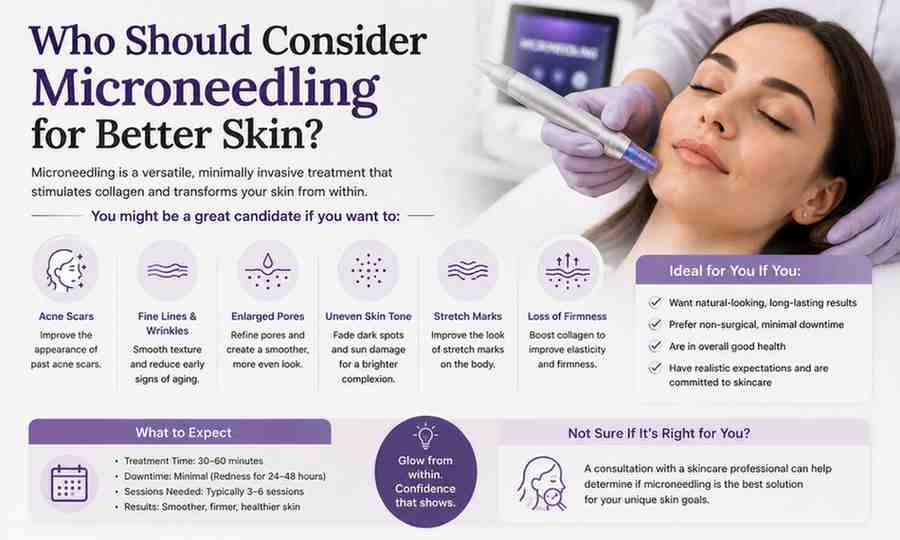
Microneedling stands as a widely recognized skin treatment that targets texture, tone, and structural integrity. It relies on controlled micro-injuries to activate collagen production, which strengthens the skin over time. While the method suits many individuals, it does not serve every skin type or concern equally.
Identifying the right candidates requires careful evaluation of skin condition, goals, and overall health. The treatment offers meaningful benefits when applied to suitable profiles.
How Microneedling Influences Skin Behavior?
Microneedling works by creating microscopic channels in the skin. These channels trigger the body’s repair response, which includes increased collagen and elastin production. The process improves structural support beneath the surface, leading to smoother and firmer skin.
The treatment also enhances the absorption of topical products. Active ingredients penetrate deeper, making skincare routines more effective. This dual effect allows microneedling to address multiple concerns at once.
The results develop gradually, reflecting the natural pace of skin regeneration. Consistent sessions support long-term improvement.
Ideal Candidates Based on Skin Concerns
Microneedling suits individuals with specific skin concerns that respond well to collagen stimulation. These concerns often involve structural irregularities rather than surface-level issues.
Common conditions that benefit include:
- Acne scars and post-acne marks
- Fine lines and early wrinkles
- Uneven skin texture
- Enlarged pores
- Mild skin laxity
Individuals with these concerns often see noticeable improvement after a series of treatments.
Individuals with Acne Scarring
Acne scars create uneven texture due to damage in the deeper layers of the skin. Microneedling stimulates collagen production in these areas, which helps fill and smooth the scarred tissue.
The gradual rebuilding process reduces the visibility of scars over time. It works particularly well for atrophic scars, which appear as depressions in the skin.
Consistency plays a key role in achieving optimal results for this group.
Those Experiencing Early Signs of Aging
Fine lines and mild wrinkles often appear as collagen production slows. Microneedling addresses this issue by encouraging the skin to produce more collagen.
The treatment strengthens the skin’s structure, reducing the appearance of lines and improving elasticity. Individuals in the early stages of aging often respond well due to their skin’s ability to regenerate efficiently.
This approach supports a smoother and more youthful appearance.
Individuals with Uneven Skin Texture
Uneven texture can result from various factors, including environmental damage and irregular cell turnover. Microneedling promotes a more uniform surface by accelerating the skin’s renewal process.
The treatment smooths rough areas and enhances overall consistency. It works effectively for individuals seeking refinement rather than dramatic transformation.
Regular sessions help maintain these improvements.
Candidates with Enlarged Pores
Enlarged pores often result from excess oil production and reduced skin elasticity. Microneedling helps tighten the surrounding tissue, which reduces the appearance of pores.
By improving collagen levels, the skin becomes firmer and more structured. This change creates a smoother surface and a more refined look.
Individuals with oily or combination skin often benefit from this effect.
Skin Types That Respond Well
Microneedling adapts to various skin types due to its controlled approach. It allows practitioners to adjust depth and intensity based on individual needs.
Suitable skin types include:
- Normal skin
- Combination skin
- Oily skin
- Mildly sensitive skin
This versatility makes the treatment accessible to a broad range of individuals.
When Microneedling May Not Be Suitable
Certain conditions require caution or may limit suitability. Individuals should consider these factors before proceeding.
Situations that may require avoidance:
- Active acne or infections
- Severe skin inflammation
- Open wounds or lesions
- Certain medical conditions affecting healing
A professional assessment ensures safe and appropriate application.
Age Considerations and Skin Response
Age influences how the skin responds to microneedling. Younger individuals often experience faster healing and collagen production. Older individuals may require more sessions to achieve similar results.
However, the treatment remains effective across age groups when applied correctly. The key lies in tailoring the approach to the skin’s condition and regenerative capacity.
Lifestyle Factors That Influence Suitability
Lifestyle habits play a role in determining how well the skin responds to treatment.
Important factors include:
- Hydration levels
- Nutritional intake
- Sun exposure
- Sleep quality
Healthy habits support the body’s ability to regenerate, enhancing the effectiveness of microneedling.
Expectations and Treatment Goals
Clear expectations help determine whether microneedling suits an individual’s needs. The treatment delivers gradual improvement rather than immediate transformation.
Individuals seeking subtle refinement often find it suitable. Those expecting instant or dramatic changes may need to adjust their expectations.
Setting realistic goals ensures satisfaction with the results.
Combining Microneedling with Other Treatments
Microneedling can complement other skincare treatments. Combining approaches often enhances overall results.
Common combinations include:
- Topical serums for enhanced absorption
- Chemical exfoliation for surface renewal
- Hydration therapies for improved skin balance
This integrated approach addresses multiple concerns simultaneously.
Treatment Commitment and Frequency
Microneedling requires a series of sessions to achieve optimal results. Each session builds upon the previous one, creating cumulative improvement.
Maintenance sessions help sustain results over time. Individuals willing to commit to this schedule often experience better outcomes.
Consistency remains a key factor in long-term success.
Comfort Level and Procedure Experience
The treatment involves controlled micro-injuries, which create a mild prickling sensation. Practitioners often use numbing agents to enhance comfort.
Most individuals tolerate the procedure well. The experience remains manageable, with minimal disruption to daily activities.
Understanding the procedure helps reduce uncertainty and improve overall comfort.
Regional Demand and Accessibility
Interest in advanced skincare treatments continues to grow across various regions. Many individuals seek options such as microneedling skin treatment Ottawa when looking for effective solutions tailored to their needs.
This demand reflects a preference for treatments that combine science-based methods with practical convenience.
Preparing for Microneedling
Preparation plays a role in achieving optimal results. Simple steps help create a favorable environment for treatment.
Preparation tips:
- Avoid strong skincare products before sessions
- Keep the skin clean and hydrated
- Protect the skin from sun exposure
- Follow professional recommendations
These actions support better outcomes and reduce the risk of irritation.
Post-Treatment Care and Skin Recovery
Proper care after treatment enhances healing and results. The skin requires gentle handling during the recovery phase.
Post-treatment practices:
- Use mild skincare products
- Avoid direct sun exposure
- Maintain hydration
- Follow recommended routines
These steps help preserve improvements and support long-term skin health.
Common Misconceptions About Microneedling
Misconceptions can create confusion about suitability.
Frequent myths include:
- It works for every skin condition
- Results appear instantly
- It replaces all other treatments
- Stronger intensity always produces better outcomes
Accurate information helps individuals make informed decisions.
Psychological Factors and Confidence
Skin improvement often influences confidence and self-image. Microneedling supports a more refined appearance, which can enhance how individuals feel about their skin.
This psychological aspect plays a role in treatment satisfaction. A balanced perspective ensures realistic expectations and positive outcomes.
Conclusion
Microneedling serves as a versatile treatment for individuals seeking improved skin texture, tone, and structure. It works best for those with specific concerns that respond to collagen stimulation. Careful evaluation of skin condition, lifestyle, and expectations ensures the best outcomes.
A consistent approach, combined with proper care, allows individuals to achieve meaningful and lasting improvements. Selecting the right candidates remains essential for maximizing the benefits of this advanced skin treatment.
FAQs
1. Who is the best candidate for microneedling?
The best candidates include individuals with acne scars, fine lines, uneven texture, or enlarged pores. These concerns respond well to collagen stimulation. A professional evaluation helps determine suitability based on skin condition and treatment goals.
2. Can individuals with sensitive skin undergo microneedling?
Mildly sensitive skin may tolerate microneedling when performed carefully. Practitioners adjust the intensity to minimize irritation. Individuals with highly reactive skin should consult a professional to ensure safety and appropriate treatment planning.
3. Is microneedling suitable for older individuals?
Yes, older individuals can benefit from microneedling. The treatment stimulates collagen production, which improves skin firmness. Results may require more sessions due to slower regeneration, but consistent treatments can still provide noticeable improvement.
4. Can microneedling help with acne scars?
Microneedling works effectively for acne scars by stimulating collagen production in damaged areas. This process helps smooth the skin and reduce the depth of scars. Multiple sessions enhance the results over time.
5. How many sessions are required for visible results?
Most individuals require several sessions to achieve noticeable improvement. The exact number depends on the severity of the concern and the skin’s response. Consistent treatments provide cumulative benefits and better overall results.
6. Are there any conditions that prevent treatment?
Certain conditions, such as active infections, severe inflammation, or open wounds, may prevent treatment. A professional assessment ensures that microneedling suits the individual’s health and skin condition.
7. Does microneedling require downtime?
Microneedling involves minimal downtime. The skin may appear slightly red or sensitive for a short period. Most individuals can resume normal activities quickly, making it a convenient option for many schedules.
8. Can microneedling improve skin tone?
Yes, microneedling promotes even skin tone by stimulating cell turnover and collagen production. It helps reduce irregular pigmentation and enhances overall brightness, resulting in a more uniform appearance.
9. Is microneedling effective for large pores?
Microneedling helps reduce the appearance of large pores by tightening the surrounding skin. Increased collagen production improves structure and elasticity, creating a smoother and more refined surface.
10. How long do the results last?
Results can last for several months with proper care. Maintenance sessions help sustain improvements. Lifestyle factors such as sun protection and hydration also influence the longevity of results.